Expert software and AI systems.
A selection from our development portfolio: SpatialAgents, the Geospatial API for AI agents, Climate Risk and Vulnerability Assessment (CRVA) built on that framework, and Düngewende.
Explore development ↗holistech
Institut für holistische Technologieforschung GmbH
Development × research × learning
Our work spans SpatialAgents and GIS applications, the evaluation of AI agents and interactive learning paths for numerical methods.
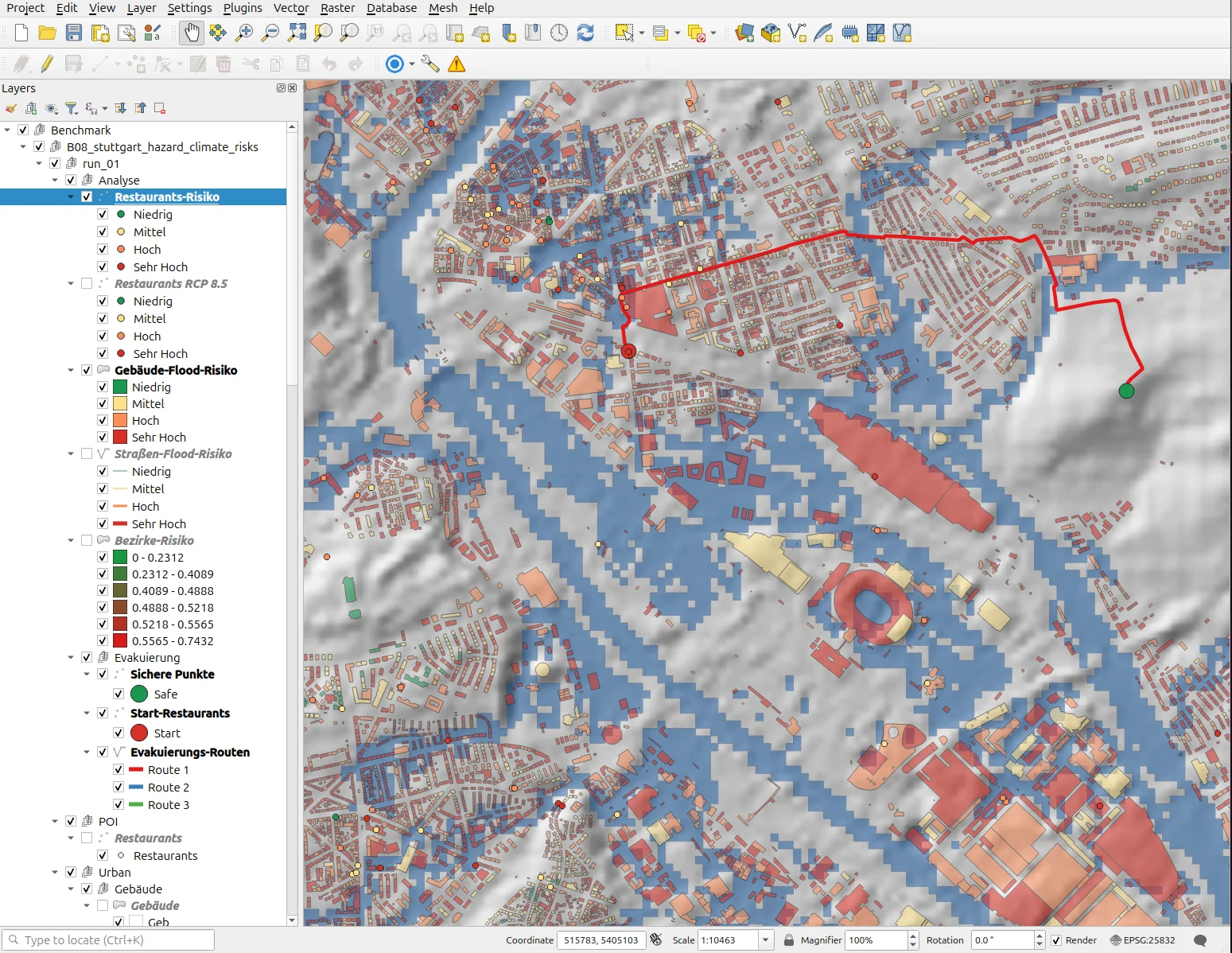
SpatialAgents Benchmark 08 · climate and hazard analysis in QGIS · risk and evacuation layers from a benchmark run
Flagship 01 · SpatialAgents
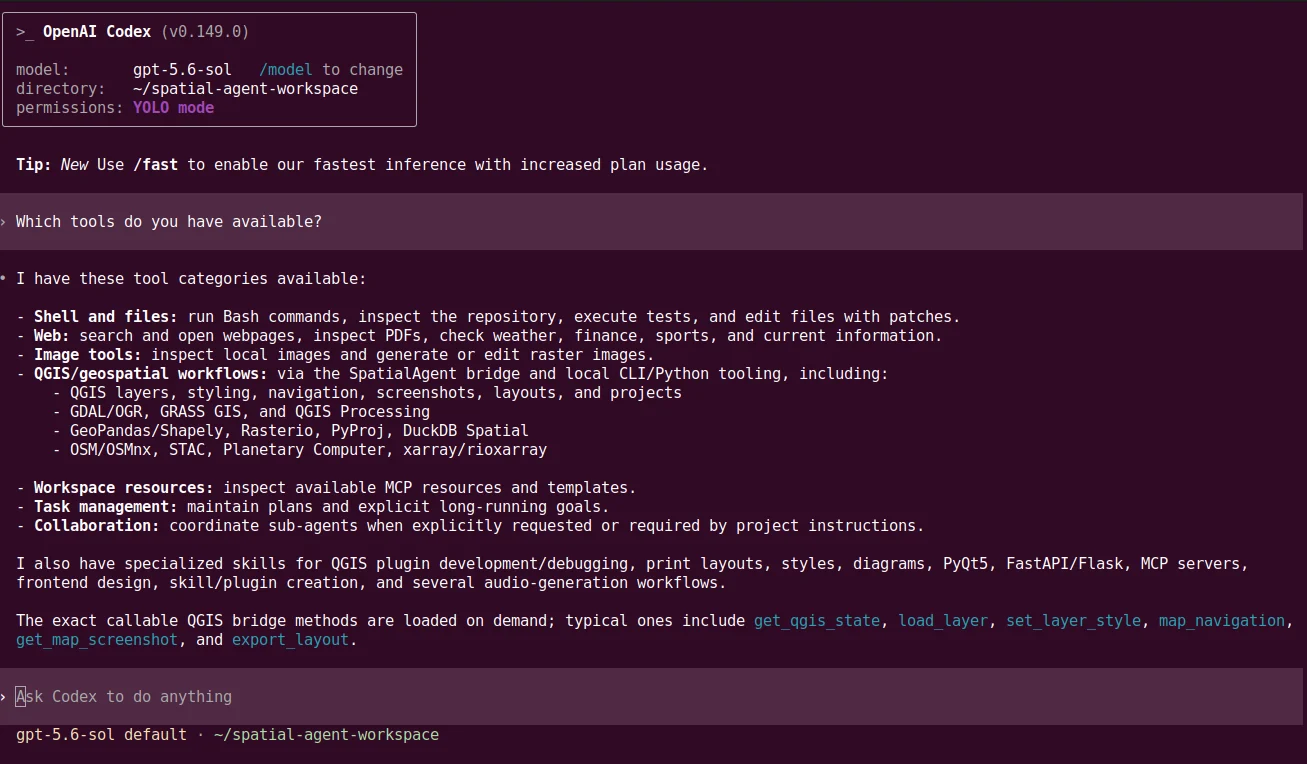
SpatialAgents connect QGIS Desktop to Claude Code, Codex CLI and OpenCode through a technical bridge.
Each supported agent system can launch multiple SpatialAgents to work on geospatial tasks in the shared workspace. The agents gain a controlled route to project state and geospatial tools. We develop the Geospatial API for AI agents as a library of its own; the SpatialAgents import it directly in the shared workspace. This lets agent systems apply their native code-generation and verification abilities without an additional MCP server and with low token overhead. Its self-describing, fault-tolerant interface supports autonomous correction through specific errors and suggested alternatives. Feedback from practical agent analyses flows continuously back into the API, tests and agent skills.
We research and develop. Projects, setup, training and support are provided by Geoinformatikbüro Dassau GmbH (GBD).
Flagship 02 · CAD-Agents
The research testbed measures dimensional accuracy, feature fidelity, shape fidelity, drawing fidelity and thread fidelity.
These six Claude Code runs with opus-5 achieved a shape fidelity score of 1.00. Every model shown was reconstructed from a technical drawing.
Select an image to open its high-resolution detail view.
Open the complete CAD-Agents siteOur fields
Three fields connect concrete systems, methodical investigation and accessible technical education.
A selection from our development portfolio: SpatialAgents, the Geospatial API for AI agents, Climate Risk and Vulnerability Assessment (CRVA) built on that framework, and Düngewende.
Explore development ↗A selection from our research programme: SpatialAgents benchmarks, CAD-Agents and SpatialApp study the execution, evaluation and deep integration of AI agents in technical software.
Explore research ↗The Learning Lab currently brings together three German-language interactive books on FEM, electromagnetism and bone remodelling.
Open the Holistech Learning Lab (German) ↗Holistech Labs
Our measurement lab tests hardware, inference engines and models under controlled conditions and publishes the run logs.
The first report compares llama.cpp and halogen-flash-server running Qwen3.8-Flash-Next on an HP ZBook Ultra G1a: the same success rate across 20 tasks, but 486 against 157 minutes over the whole run.
Open Holistech Labs